Enhancing Outdoor Living: Integrating Pavers With Living Spaces
Your backyard holds amazing potential, but right now it feels like separate, disconnected spaces that don't flow together well. You have a deck here, some grass there, maybe a garden bed somewhere else, yet none of these areas work together to create the outdoor living space you dream about.
Paver patios provide a solid, level surface suitable for outdoor furniture, grills, and amenities, making them ideal for relaxation and entertainment. These versatile hardscape elements can bridge the gap between different areas of your yard, creating smooth transitions and defined zones for dining, lounging, and play.
Integrating pavers with outdoor living features opens up endless possibilities for your patio design, from creating cozy fire pit areas to building complete outdoor kitchens that rival indoor spaces.
This guide will show you creative paver patio ideas that transform your backyard into multiple functional living spaces. You'll discover how to use pavers to create seamless pathways, establish outdoor dining areas, and blend hardscape with beautiful landscaping.
Key Takeaways
Pavers create distinct outdoor living zones for dining, lounging, and entertainment while providing seamless pathways between different functional areas.
Paver foundations support outdoor kitchens, bars, and fire pits, transforming backyards into complete entertainment spaces with proper utility integration.
Strategic paver placement with integrated planters and water features creates natural transitions between hardscape and softscape landscape elements.
Proper lighting and shade solutions extend paver patio usability into evening hours while enhancing safety and visual appeal.
Professional paver installation ensures maximum durability and adds lasting property value through well-designed outdoor living space integration.
Designing Outdoor Living Zones
Your outdoor space transforms into distinct living zones when you use pavers to define separate areas for dining, relaxation, and entertainment. Expert paver installation creates natural boundaries that allow you to create the outdoor space of your dreams, complete with smooth pathways that connect each functional area seamlessly.
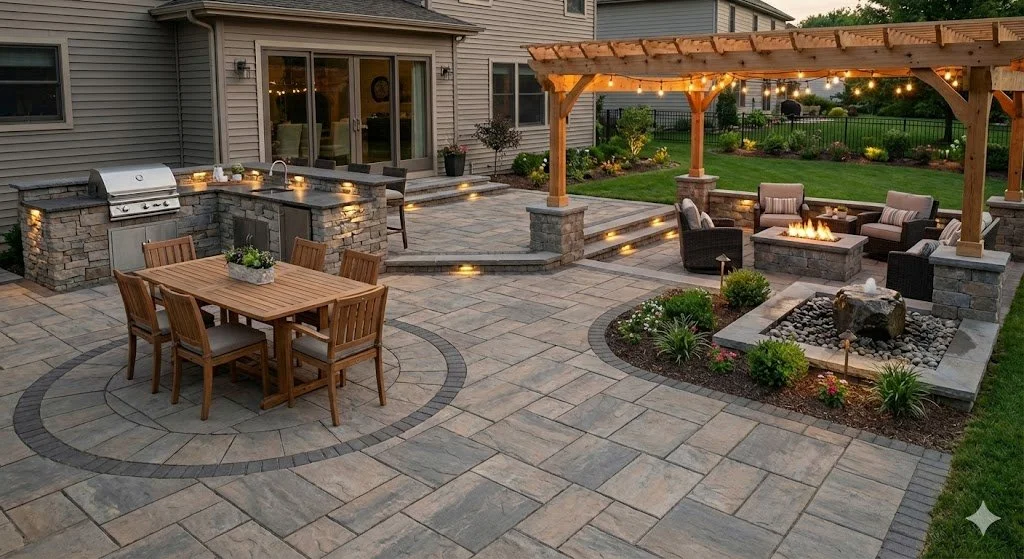
Segment dining, lounging, and play areas with pavers
Pavers create distinct zones that transform your outdoor living space into organized areas for different activities. Smart paver design helps you define dining, lounging, and game areas while maintaining smooth flow throughout your patio.
Install contrasting paver patterns around your outdoor dining table to establish a dedicated eating zone within your larger patio area.
Design paver walkways that connect your dining zone to play areas, helping family members move easily between different outdoor activities.
Place weather-resistant outdoor rugs over specific paver sections to further define lounging spaces and add comfort underfoot.
Install paver inlays with decorative patterns to mark transition points between your outdoor kitchen and dining areas.
Use thick paver borders around game areas like bocce ball courts or putting greens to keep activities contained and organized.
Design sectional paver layouts that accommodate different seating arrangements, allowing you to create intimate conversation areas within larger spaces.
Construct pathways for smooth transitions between areas
After creating distinct zones for dining and lounging, you need pathways to connect these spaces seamlessly. Well-designed walkways transform your outdoor living area into a cohesive retreat that flows naturally from one zone to another.
Install a 4-6 inch layer of compacted crushed aggregate as your base foundation for proper drainage and long-term stability of your paver walkways.
Choose herringbone or running bond patterns for your walkway design to create visual interest while ensuring durability and easy maintenance.
Add metal, plastic, or concrete edging restraints along pathway borders to prevent paver shifting and maintain clean, professional lines.
Install drainage pipe along the low side of pathways, covering with gravel to prevent water pooling and protect your paver patio project.
Connect patios, gardens, pools, and driveways with strategic paver walkways to create a navigable outdoor environment that enhances functionality.
Use lighting and edging stones along pathway borders for improved safety during evening hours and enhanced outdoor aesthetics.
Match your pathway paver options with existing patio materials to create unity while allowing each outdoor living zone to maintain its distinct character.
Building Functional Outdoor Features
Pavers offer incredible versatility when building functional outdoor features that transform your backyard into a true outdoor living area. These durable surfaces create the perfect foundation for outdoor kitchens, bars, and fire features, making your patio a hub for entertaining and relaxation.
Establish outdoor kitchens and bars on paver foundations
Outdoor kitchens and bars transform your backyard into a true outdoor living area that rivals any indoor space. Paver foundations provide the perfect base for these functional outdoor living features, offering durability and style that enhance your outdoor living space.
Plan gas, water, and electricity integration within your paver foundation before installation begins, ensuring all utilities reach your outdoor kitchen location safely and efficiently.
Choose concrete pavers for your outdoor kitchen foundation since they offer versatility and affordability while supporting heavy counters, built-in grills, and cooking equipment.
Install non-slip pavers in high-traffic outdoor cooking and dining areas to prevent accidents and create a safer workspace for food preparation and entertaining.
Select weather-resistant materials for your paver base and include proper drainage solutions to protect your outdoor kitchen investment from moisture damage.
Extend your patio paver design to accommodate grill stations and prep areas, creating a seamless flow between cooking and dining zones in your outdoor space.
Consider prevailing wind direction during paver patio installation to position your outdoor kitchen away from seating areas, controlling smoke and cooking odors effectively.
Create fire pits with integrated seating areas
Creating a paver fire pit design transforms your outdoor space into the perfect gathering spot. Well-designed outdoor fire pit areas combine warmth, comfort, and style for year-round entertainment.
Position your fire pit away from structures and buildings to ensure safety while creating a cozy focal point for your patio paver ideas.
Choose heat-resistant pavers for the fire pit zone to handle high temperatures and protect your investment in beautiful outdoor hardscaping.
Design circular or square paver patterns around the fire pit to create a cohesive gathering space that defines the entertainment area.
Build stone seating walls around the fire pit perimeter to add comfort and create natural conversation zones for guests.
Install low-voltage landscape lighting for paver patio areas around the fire pit to enhance nighttime ambiance and improve safety.
Plan comfortable traffic flow in your design sketches to allow easy access between the fire pit and other outdoor living zones.
Create a sunken paver patio design around the fire pit to establish an intimate outdoor retreat that feels separate from other areas.
Use flagstone or brick paver patio materials that match your home's exterior to create visual unity across your full outdoor living space.
Merging Hardscapes with Softscapes
Pavers are versatile materials that bridge the gap between hard surfaces and natural elements, creating seamless transitions throughout your outdoor space. A well-designed paver layout works with plants, trees, and grass to establish harmony that makes your yard feel like a natural extension of your home.
Combine pavers with greenery for natural transitions
Creating smooth transitions between your stone paver patio and garden areas transforms your outdoor space into a cohesive living environment. Well-designed paver layouts with integrated greenery can add natural beauty while maintaining the functional benefits of hardscaping.
Install built-in planters directly into your paver layout to create seamless transitions between hardscape and softscape elements. These planters introduce greenery while enhancing privacy around your outdoor dining or living areas.
Fill paver joints with gravel or mulch instead of traditional sand to allow organic materials to blend naturally with your hardscape design. This technique creates softer visual transitions throughout your patio space.
Create linear planting beds within your paver patterns to establish living pathways that guide guests through different outdoor zones. These green corridors break up large expanses of stone while maintaining clear walkways.
Add raised planters along paver edges to serve as natural wind barriers and introduce vertical elements to your landscape design. These features elevate your outdoor space while providing practical benefits for plant growth.
Incorporate vertical gardens or decorative screens with trellises near your paver installations to support climbing plants and create natural privacy screens. Garden hose reels can be hidden behind these features to maintain a tidy appearance.
Design freestanding planters that complement your paver stone colors and textures to enhance visual unity across your entire outdoor living space. Match plant selections with your paver tones for maximum aesthetic impact.
Establish planting zones between different paver sections to naturally segment dining, lounging, and play areas without requiring additional hardscape barriers. This approach creates distinct spaces while maintaining flow throughout your yard.
Elevating Outdoor Aesthetics and Ambiance
Your outdoor space transforms into a stunning retreat when you add water features and built-in planters that work seamlessly with your paver design. Strategic lighting and shading solutions create the perfect atmosphere, turning your patio look from ordinary to extraordinary while making your outdoor living space usable day and night.
Install water features and built-in planters
Water features and built-in planters transform your outdoor patio into a stunning focal point that combines beauty with function. These additions can add significant value to your outdoor living space while creating peaceful zones for relaxation.
Position fountains or small ponds strategically as focal points within your paver patio design to create visual interest and natural ambiance.
Ensure proper drainage systems protect your paver stones from water damage while maintaining the structural integrity of your outdoor space.
Construct built-in planters using matching or complementary paver materials to enhance visual unity across your large patio area.
Design planters to match the color and texture of your existing pavers, creating seamless transitions between hardscape and softscape elements.
Install raised planters and vertical gardens to provide privacy while defining distinct outdoor zones for dining and lounging areas.
Create decorative water feature surrounds using natural stone or flagstone pavers for an elegant, cohesive appearance.
Plan splash and drainage patterns carefully to prevent water from undermining your paver foundation and compromising long-term stability.
Integrate water features with your outdoor fireplace or fire pit areas to create multi-sensory experiences that enhance your outdoor decor.
Choose easy-to-install planter systems that complement your simple paver patio ideas while adding greenery and structure to the space.
Add lighting and shading solutions
Water features and planters create stunning focal points, but proper lighting and shade make these spaces truly functional. Smart lighting and shading solutions transform your paver patio into a comfortable retreat that works day and night.
Install string lights above paver patios to create a warm, inviting ambiance for evening gatherings and extend usable hours into the night.
Place LED path lights along paver walkways to enhance safety while guiding guests smoothly between different outdoor living zones.
Add solar-powered lights around fire pit areas and seating zones to highlight key features without increasing electricity costs.
Use low-voltage landscape lighting to accent water elements and garden beds, creating dramatic focal points after sunset.
Install dimmable fixtures near outdoor kitchens and bars built on paver foundations to adjust brightness for cooking and entertaining.
Choose lighter paver colors paired with shade structures to reflect heat and prevent overheating in sunny locations.
Install spotlights to highlight retaining walls and architectural features, adding depth and visual interest to your paver design.
Combine integrated lighting with shade solutions to create comfortable zones where pavers can add both beauty and functionality year-round.
Conclusion
Pavers transform ordinary backyards into extraordinary outdoor sanctuaries that your family will cherish for years. These versatile materials create seamless connections between different living zones while adding lasting value to your property.
Professional installation ensures your paver project delivers maximum beauty and durability from day one. Your dream outdoor space awaits, complete with all the functional features and aesthetic touches that make entertaining effortless.
FAQs
1. What makes pavers an excellent choice for outdoor living spaces?
Pavers are an excellent choice because they offer durability, style, and versatility for any outdoor project. They work well with retaining walls and can transform your yard into a beautiful living area. This type of patio material gives you endless design options.
2. How can I create an outdoor space that balances minimalism with usability?
Focus on clean lines and simple patterns when installing pavers in your outdoor living area. Choose neutral colors and limit decorative elements to maintain a minimalist look while ensuring the space remains functional for daily use.
3. What are some creative ideas for your outdoor patio using pavers?
Consider mixing different paver sizes to create interesting patterns, or combine pavers with retaining walls for multi-level designs. You can also use contrasting colors to define separate areas like dining and lounging zones.
4. How do paver patios offer advantages over other patio materials?
Paver patios offer easy repair options since individual stones can be replaced without redoing the entire surface. They also provide better drainage than solid concrete and add a natural touch to your outdoor space.
5. What ideas with pavers work best to enhance your outdoor living space?
Create walkways that connect different areas, build raised planters using pavers with retaining walls, or design a fire pit area as a focal point. The best patio designs combine function with visual appeal to maximize your outdoor enjoyment.